

Standing With Communities After the Floods
Ongoing
20thSep 26
Emergency Response to the 2026 Central Nepal Flash Floods
Responding Beyond Immediate Relief
The 2026 flash floods caused significant disruption across communities in Central Nepal, damaging homes, roads, public infrastructure and essential services. In the immediate aftermath, affected communities faced shortages of basic supplies, difficult access to transportation and disrupted access to essential services. Bighnaharta Nepal mobilized to respond to these immediate needs while also supporting practical measures that could help communities and local responders begin the recovery process. Our response combined humanitarian relief, access restoration, basic health support, energy solutions, debris clearance and assistance to frontline responders.
Supporting Flood-Affected Families
Bighnaharta Nepal provided essential relief supplies to 120 affected families in the response areas.
The assistance included:
-Food supplies
-Clothing
-Beds
-Blankets
-Essential household items
For families who had lost possessions or were unable to meet their immediate needs following the floods, these supplies provided critical support during the early days of the recovery process.
Restoring Access to Isolated Communities
Floodwaters and landslides deposited large quantities of debris on local roads, disrupting transportation and making it difficult for communities and responders to move. Bighnaharta Nepal supported debris-clearance operations to reopen a motorable road in the affected area. Restoring road access was an important part of the response—not only for the movement of relief materials, but also for reconnecting affected communities with health facilities, markets, government services and surrounding areas.
Powering a Temporary Holding Center
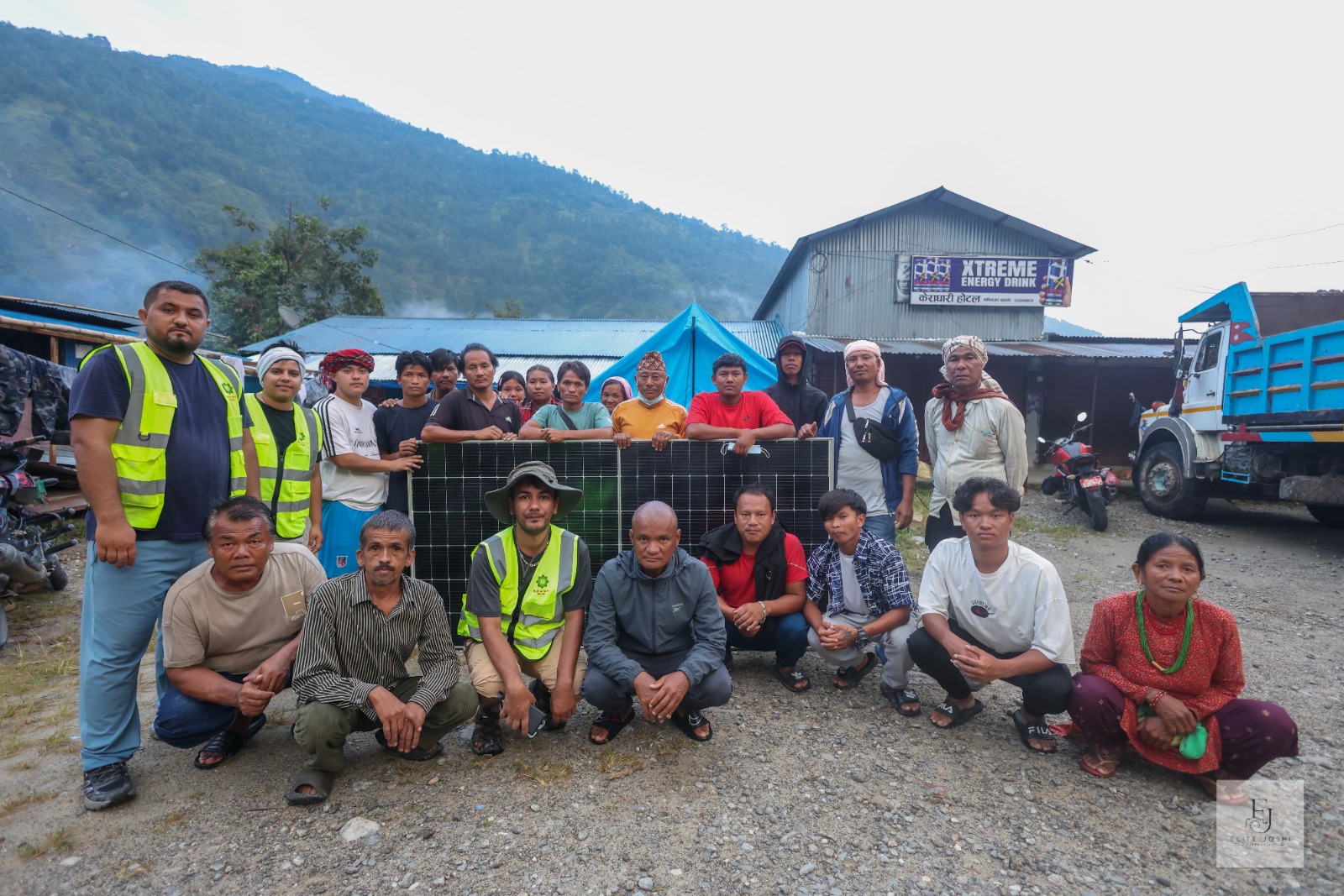
Access to reliable electricity can become a significant challenge following a disaster. To support a temporary holding center serving people affected by the floods, Bighnaharta Nepal installed a 2 kW solar power system. The installation provided a practical and renewable source of electricity for the facility and demonstrated the role that decentralized energy solutions can play in maintaining essential services during emergencies.
Bringing Health Services Closer
Disasters can severely disrupt access to healthcare, particularly in communities where roads and transportation networks have been damaged. Bighnaharta Nepal established a temporary health camp to help provide basic health services to affected communities during the emergency period. The health camp formed part of a broader effort to ensure that humanitarian response addressed not only immediate material needs but also essential health and wellbeing.
Supporting Frontline Responders
Local authorities and security personnel—including the Nepal Army and Nepal Police—played a critical role in emergency operations, including debris clearance, access restoration and support to affected communities. Bighnaharta Nepal provided essential tools such as shovels, pickaxes and spades to the Nepal Army, Nepal Police and local government authorities working in the affected areas. While simple, these tools were essential for teams carrying out physically demanding post-disaster clearance and recovery work.
Supporting the Restoration of Critical Infrastructure
The floods also affected critical infrastructure in the region. Bighnaharta Nepal supported a cleaning campaign inside the Trishuli 3A Hydropower Tunnel, which had been badly affected by the disaster. The operation contributed to post-disaster cleanup efforts at an important piece of regional infrastructure and highlighted the need for coordinated action to restore critical facilities following major disasters.
A Response Built Around Local Needs
Bighnaharta Nepal's response was designed around the realities communities and responders were facing on the ground. Rather than focusing exclusively on the distribution of relief items, the response combined immediate humanitarian assistance with practical recovery measures: 120 families received essential relief supplies. A 2 kW solar system helped provide electricity to a temporary holding center. A temporary health camp brought basic health services closer to affected communities. Road clearance operations helped restore motorable access. Emergency tools strengthened the capacity of the Nepal Army, Nepal Police and local government responders. Cleaning operations at the Trishuli 3A Hydropower Tunnel contributed to the recovery of damaged critical infrastructure.
Standing With Communities in Crisis
The Central Nepal flash floods demonstrated how quickly a disaster can disrupt the interconnected systems communities depend upon—homes, roads, health services, public infrastructure and livelihoods. For Bighnaharta Nepal, emergency response means being present where the need is greatest and working alongside communities and local responders to address both immediate needs and the practical challenges of recovery. Our response in Rasuwa and Nuwakot was made possible through the collective efforts of communities, local authorities, security agencies, responders and supporters. From immediate relief to restoring access and supporting recovery, Bighnaharta Nepal stood with communities through one of their most difficult moments.
Our Way Forward: From Emergency Response to Recovery
The immediate emergency response is only the first step. Bighnaharta Nepal is committed to building on this work through long-term Early Recovery and Rehabilitation programs in disaster-affected communities. Our next phase will focus on helping affected families and communities restore livelihoods, rehabilitate essential infrastructure, strengthen access to basic services, and build greater resilience to future disasters. Working closely with communities, local governments and partners, Bighnaharta Nepal aims to support a community-led recovery process that moves beyond relief toward sustainable rehabilitation and resilience.
Support our Early Recovery and Rehabilitation efforts and help communities rebuild, recover and move forward
Donate Here
Note to donors: We are accepting donations via our US Based Fiscal Sponsor Asplund Earth Alliance , a a global, women-led 501(c)(3) environmental nonprofit organization. Bighnaharta Nepal and Asplund Earth Alliance entered into a long term partnership in 2025.